

Yes, you can get paid to lose weight, but the money is small and some of it is your own. Weight loss betting apps pay you from a pot that players who miss the goal leave behind, and step apps pay a few cents a day in points.
This guide covers what each kind of app pays according to the company's own published numbers, what you have to put at risk, and how people end up losing money. It also covers health insurance and employer wellness rewards, which are often the easiest money here because you do not have to bet anything.
If you only want extra cash and the weight goal is secondary, the list of apps that pay you real money is a faster route.
Best Apps That Pay You to Lose Weight
Three apps on this page can put money or rewards in your pocket. Two more are useful for motivation but never pay you, and they are covered further down. Here is how they compare.
| App | How it pays | What you risk | Published figure |
|---|---|---|---|
| Sweatcoin | Rewards for steps | Nothing | 1,000 steps = 0.95 sweatcoins. No cash value published |
| DietBet | Share of a betting pot | Your bet | Fee of 10% to 25% of the pot. No average payout published |
| Evidation | Points for healthy habits | Nothing | 10,000 points = $10 |
| stickK | Does not pay you | Your stake, $5 minimum per reporting period | You get nothing back beyond keeping your stake |
| Charity Miles | Pays charity, not you | Nothing | No per-mile figure published |
1. Sweatcoin
Free Step RewardsSweatcoin counts the steps your phone records and turns them into its own in-app currency, called sweatcoins. The company says 1,000 verified steps earn 0.95 sweatcoins after its 5% commission, so a 10,000 step day is worth 9.5 sweatcoins. You spend them inside the app on rewards the company lists as gadgets, digital subscriptions, travel vouchers and crypto. Sweatcoin does not publish a dollar value for a sweatcoin, so treat it as a reward for walking you already do and not as income. There is nothing to bet and no weigh-in.
2. DietBet
- Payment methods: Winnings land in your account as points that you cash out through PayPal
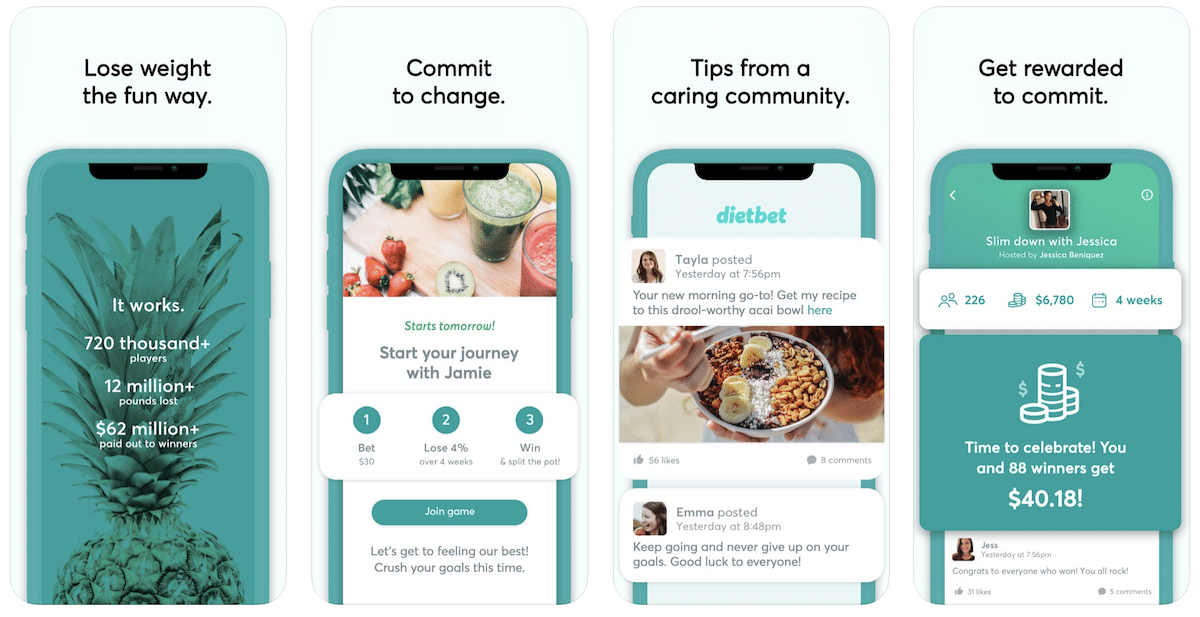
- Quick summary: You put money into a shared pot. Everyone who hits the weight goal splits the pot after DietBet takes its fee.
DietBet runs two main games. A Kickstarter asks you to lose 4% of your starting weight in 4 weeks. A Transformer asks you to lose 10% in 6 months. You pay your bet up front, and games listed on its site when I checked asked for bets of roughly $35 to $50.
You weigh in with two photos, one of you on the scale and one of the readout next to a code word DietBet gives you, and a referee reviews them. Games with bets over $100 need a video weigh-in. After the last day you have 48 hours to weigh out.
DietBet's fee is 10% to 25% of the pot, depending on the size of the bet, and it comes out before winners are paid. What you win depends on how many other players miss, so the company does not publish an average payout. If nearly everyone in your game wins, you get back little more than you put in.
Pros
- You can cancel a Kickstarter up to 7 days after the game starts for a full refund
- Weigh-ins are reviewed by a person, which keeps games fair
- You can host a private game with friends or coworkers
Cons
- You lose your whole bet if you miss the goal
- DietBet keeps 10% to 25% of the pot
- You are disqualified with no refund if you skip the final weigh-in or lose weight too fast
3. Evidation
- Payment methods: Bank transfer, PayPal, gift card or a donation to charity
- Quick summary: A free app that gives you points for tracking healthy activity and answering health questions. It does not pay you for pounds lost.
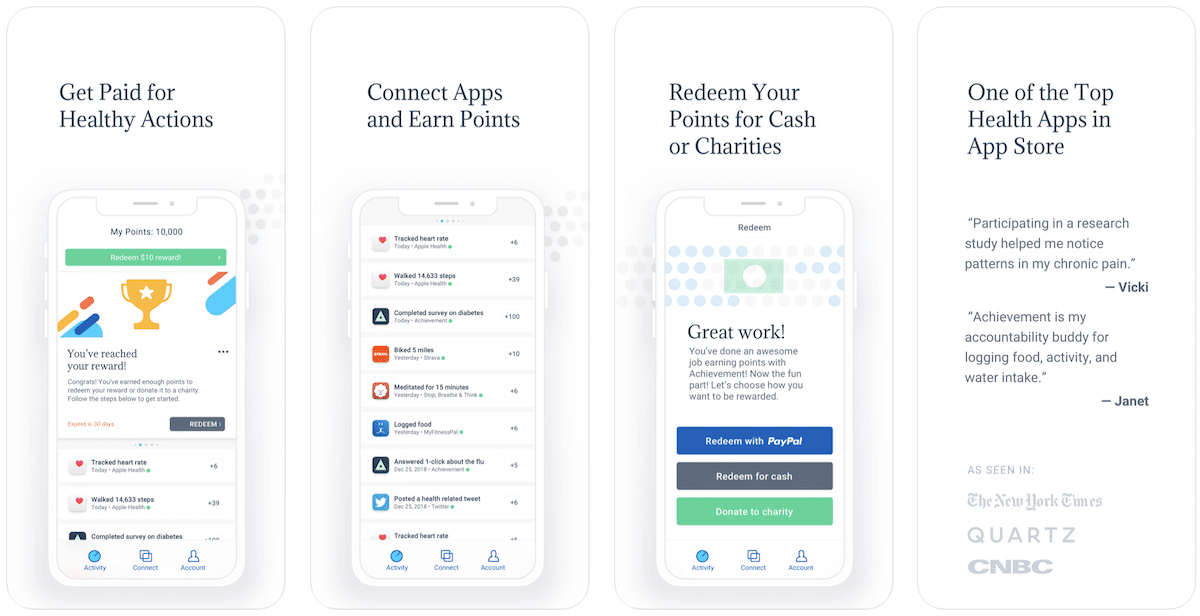
Evidation, which used to be called Achievement, connects to the fitness apps and wearables you already use. You earn points for synced activity such as walking, exercise, sleep, nutrition and vitals, and for completing cards in the app, which are short check-ins, surveys and articles. Joining health programs and research studies can earn extra points.
The math is simple and slow. Evidation pays $10 for every 10,000 points, and tracked activity earns at most 40 points a day. On tracking alone that is 250 days to reach $10, or about 4 cents a day. Completing cards every day gets you there sooner, and Evidation says members who do that redeem much faster than people who only connect a tracker.
One thing to watch: your points expire if you go 12 months without completing a card. If you want this kind of slow, hands-off reward, see the other passive income ideas.
Pros
- Free, with nothing to bet
- Works in the background once your tracker is connected
- You can take the reward as free PayPal money or donate it
Cons
- Very slow: activity points are capped at 40 a day
- You cannot cash out until you reach 10,000 points
- Points expire after 12 months without completing a card
Apps That Add Motivation but Do Not Pay You
These two apps were on the original version of this list. They can help you stick to a goal, but neither one sends you money, so do not sign up expecting a payout.
StickK
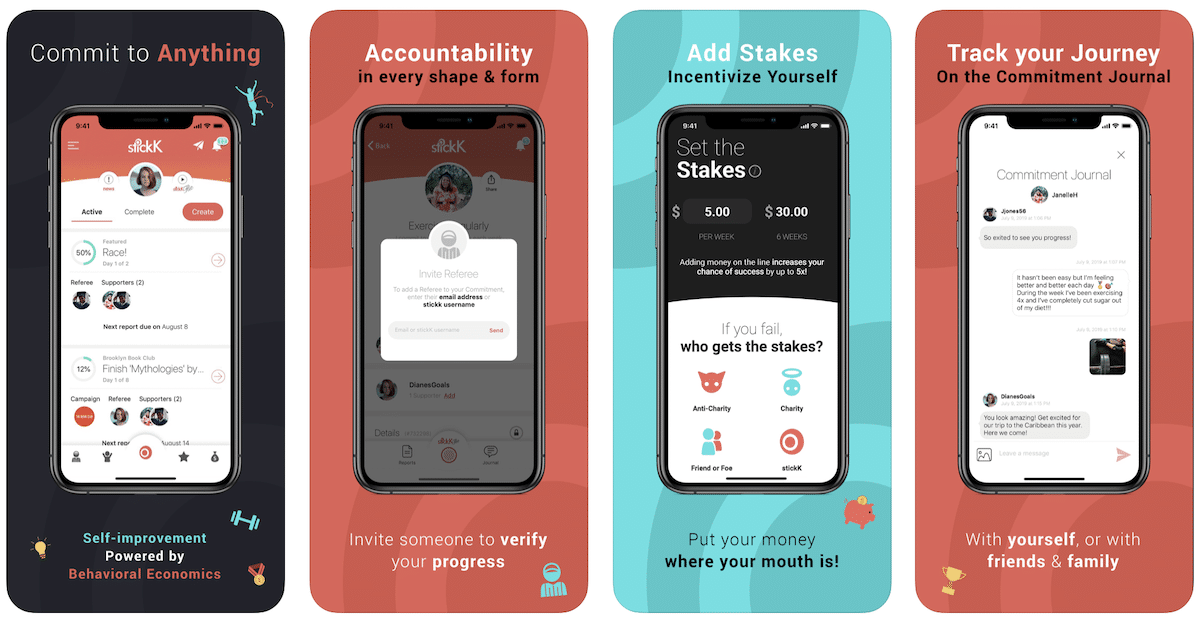
stickK (iOS or Android) is a free goal-setting platform created by behavioral economists at Yale University. You write a commitment contract for any goal, set a timeline, and can put money on the line. If you add money, the minimum stake is $5 per reporting period.
You can name a referee, such as a friend or your spouse, to confirm your reports. If you fail, your stake goes to a person, a charity, or an “anti-charity”, which is an organization you would hate to fund. If you succeed, you keep your own money and nothing more. There is no prize.
Pros
- Free to use, and you can set a goal with no money attached
- A referee adds real accountability
Cons
- There is no way to win money
- A failed contract costs you your stake, and stickK says a stake forfeited to charity is not tax deductible
Charity Miles
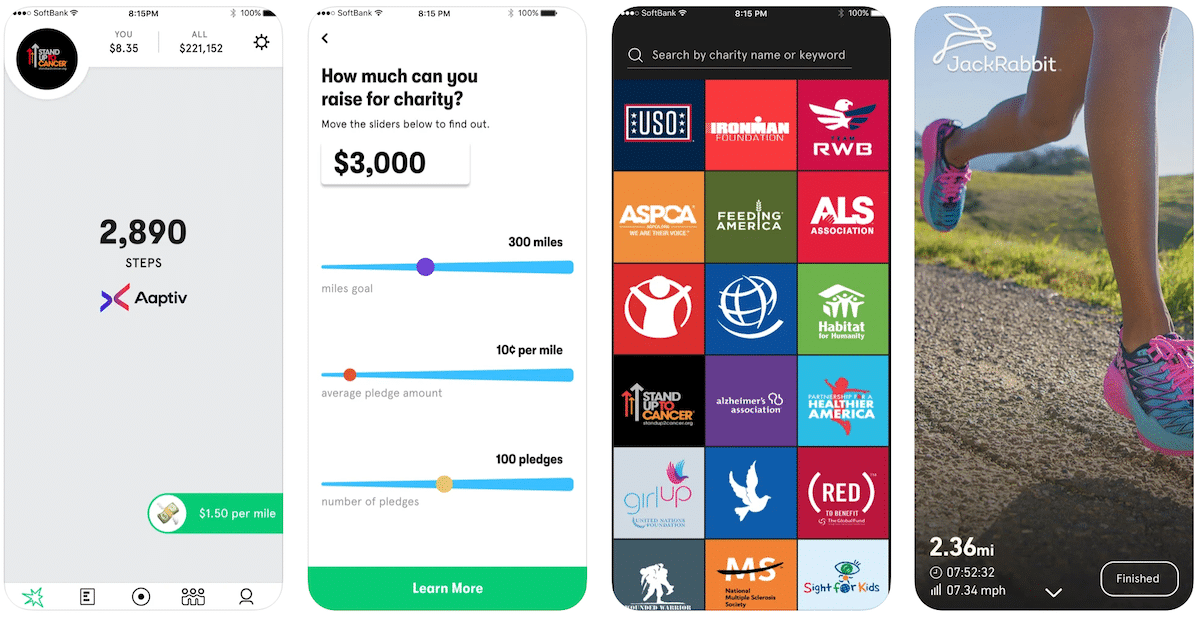
Charity Miles is a free app that turns the miles you walk, run or bike into money for a charity you pick (see the list here). The donation is funded by sponsors, and friends can also pledge to sponsor your miles. None of the money comes to you, and the company does not publish a per-mile figure on its site.
Pros
- Free to use
- Your regular walks and rides raise money for a cause you choose
Cons
- You earn nothing for yourself
How Weight Loss Betting Works and How People Lose Money
A weight loss bet is not a wage. The prize money is the bets of the players who failed, minus the company's cut. That has a few consequences.
- Miss the goal by any amount and the whole bet is gone. Losing 3.9% in a 4% game pays the same as losing nothing.
- Missed paperwork counts as a loss. On DietBet, failing to submit a final weigh-in gets you disqualified with no refund.
- Losing too fast also disqualifies you. DietBet removes players who lose 12% or more of their starting weight in a Kickstarter, and it will not let you join if the goal would put your BMI under 18.5.
- A game full of winners pays almost nothing. The pot is split between everyone who hits the goal after the fee comes out.
- The upside is unknown when you pay. No betting app can tell you your payout in advance, because it depends on other players.
Only bet an amount you would be fine never seeing again. HealthyWage, the best-known weight loss wager site, used to be the top pick on this page. I no longer recommend or link to it.
- Ask your health plan or HR department what wellness rewards you already qualify for
- Connect a free step app so the walking you already do earns something
- Join a betting game only if a refund window lets you back out, and keep the bet small
Other Ways to Get Paid to Lose Weight
Apps are not the only option, and they are often not the best one.
Office Challenges
An office weight loss challenge works like a private betting game. Everyone pays in, one trusted person tracks the weigh-ins, and the pot goes to whoever meets the goal. Set the start date, end date, weigh-in days and payout rule in writing before anyone pays. Measuring percentage of body weight lost is fairer than pounds, and you keep the full pot because no company takes a fee.
Insurance Reimbursements
Check your health plan and your employer before you download anything. Many insurers and employers run wellness programs that reward things like a health screening, a coaching program, a step goal, or a gym or weight management program. Rewards usually show up as a premium discount, a gift card, a contribution to a health account, or a reimbursement.
Amounts differ by plan and no single figure applies to everyone, so I am not quoting one. Under federal rules explained by the U.S. Department of Labor, a reward tied to a health outcome, such as reaching a target weight, generally cannot be worth more than 30% of the cost of your coverage, and the plan has to offer a reasonable alternative way to earn it if you cannot meet the target. Your plan documents or HR team can tell you what is on offer.
HSA and FSA Money for Weight Loss Programs
This one does not pay you, but it can lower what a program costs. HSAs and health FSAs cover qualified medical expenses, and IRS Publication 502 says a weight loss program counts as a medical expense only when it treats a specific disease diagnosed by a physician, such as obesity, hypertension or heart disease.
The same publication says gym, health club and spa dues do not count, and neither do diet foods or drinks that replace what you would normally eat. A program you join for general health or appearance is not covered. Ask your plan administrator what proof it needs before you spend the money.
Bets with Friends
A bet with a friend or family member is the cheapest version of all this. There is no fee and no app, and you both have a reason to keep going. Agree on the goal, the end date and the amount up front, and keep the amount small enough that the friendship survives it.
How to Stay Motivated While Getting Paid to Lose Weight
Money on the line works for some people because losing $40 stings more than winning $40 feels good. If that is you, a small bet with a refund window is a reasonable test. If a bet would stress you out, a free step app or a wellness reward gives you a nudge with nothing to lose.
One safety note. Do not crash diet to win a bet, and talk to your doctor before you commit to a big weight loss goal. No payout on this page is large enough to be worth your health.
How to Choose Your Favorite Weight Loss Challenge App
Start with what you are willing to risk.
- Nothing: use a step or activity app, and check your health plan's wellness rewards.
- A small bet: pick a game with a refund window and read the weigh-in rules before you pay.
- You want accountability, not cash: a commitment contract or a charity app does that job.
Then read recent reviews on the App Store and Google Play. Look for complaints about weigh-in rejections and payout delays, because those are the points where people lose money.
Frequently Asked Questions
There are three main ways. You can join a betting game such as DietBet, where players who hit the goal split a pot. You can use a free step or activity app that pays small rewards. Or you can claim a wellness reward from your health insurer or employer.
Not much. Evidation pays $10 for every 10,000 points, and tracked activity is capped at 40 points a day. Sweatcoin gives 0.95 sweatcoins per 1,000 steps and does not publish a dollar value for them. DietBet does not publish an average payout, because winnings depend on how many players in your game miss the goal.
Yes. If you miss the goal you lose your whole bet. On DietBet you are also disqualified without a refund if you skip the final weigh-in or lose weight faster than its limits allow, and its fee of 10% to 25% comes out of the pot before winners are paid.
Yes, Sweatcoin is a real app that converts your steps into sweatcoins you can spend on rewards inside the app. It is free to use. It is not a way to earn a wage, because the company does not publish a cash value for a sweatcoin.
Some plans do, through a wellness program. Rewards are usually premium discounts, gift cards, health account contributions or reimbursements for a qualifying program. The amount depends on your plan, so check your plan documents or ask HR.
Only in limited cases. IRS Publication 502 says a weight loss program is a medical expense when it treats a specific disease diagnosed by a physician, such as obesity, hypertension or heart disease. Gym dues and diet food do not count. For more ways to earn on the side, see these side hustle apps.
Ready to Get Paid to Lose Weight?
Getting paid to lose weight is real, but it is a small bonus on top of a goal you already have. The free options pay cents a day, and the betting options pay more only because other people lose.
If you would rather be paid directly for moving, look at delivery app jobs. Some delivery apps let you deliver on foot or by bike, and they pay per delivery. A phone or a tracker like a Fitbit will count the steps either way.
For money that has nothing to do with the scale, see the best side hustles and these ways to get free money.